Pools, Lanes, and Message Flows
Participants
Participants are responsible for performing the activities that comprise a process flow. Participants can be
- Organizations
- Roles
- Systems
Pools
Pools are containers for the sequence flow that a participant is responsible for.
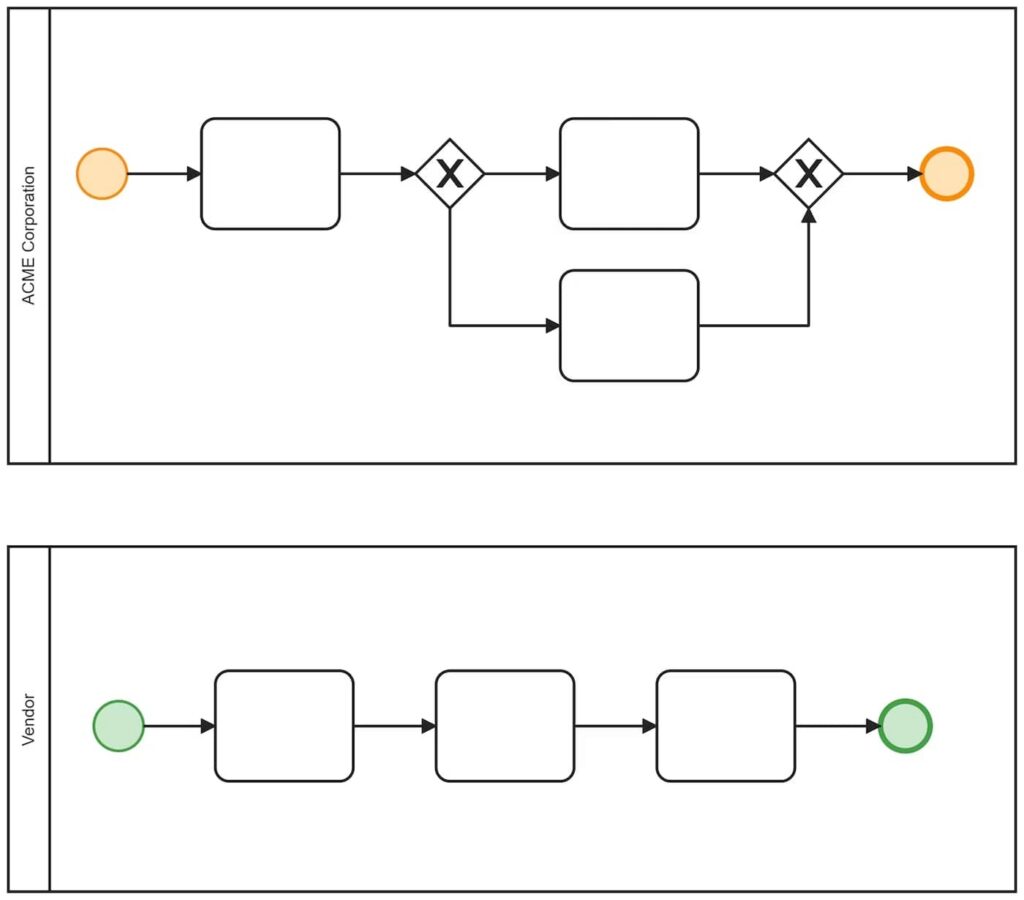
- Every participant has their own pool.
- Every end-to-end process is contained within a single pool. In other words, sequence flows cannot cross pool boundaries.
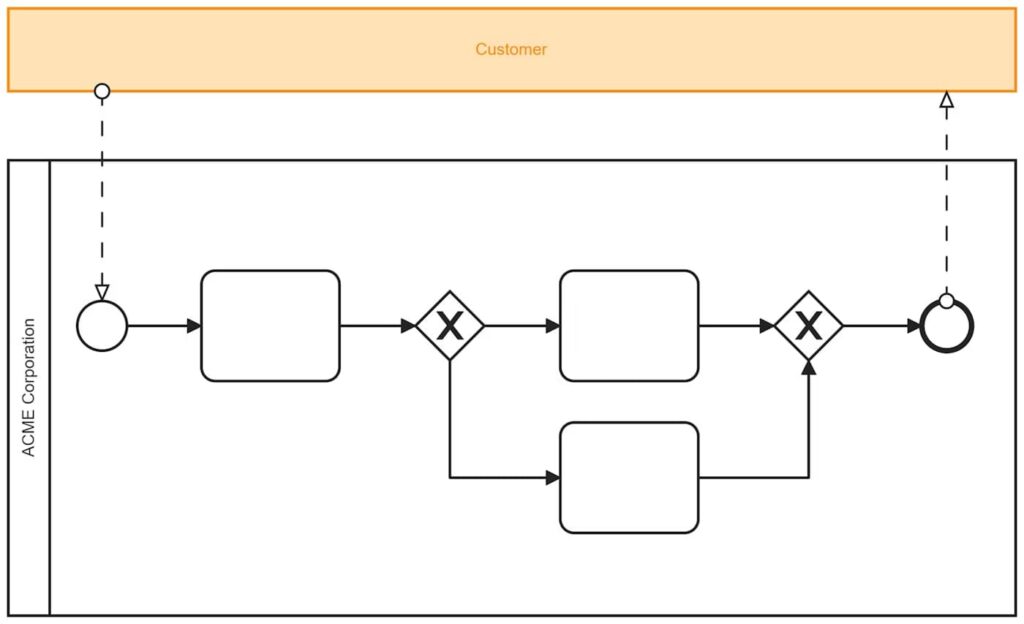
“Black box” pools—such as the Customer pool below—are used when details of a participant’s process are unavailable or unimportant.
Lanes
Pools can be subdivided hierarchically to clarify responsibility for process activities.
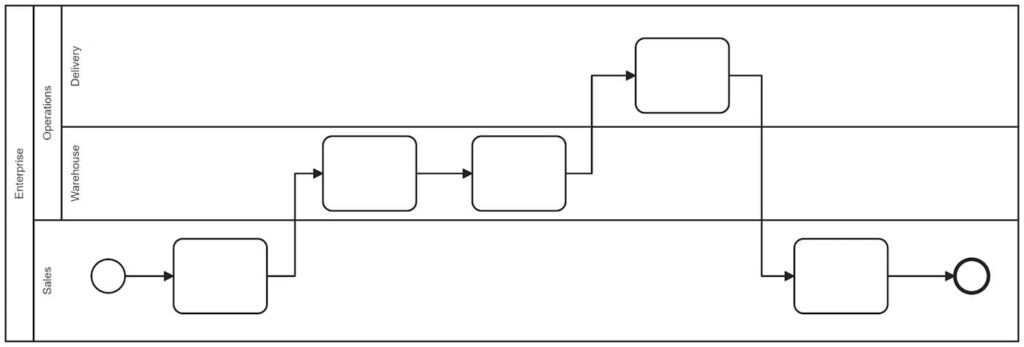
In the example above,
- The Enterprise pool is divided into Sales and Operations lanes.
- The Operations lane is subdivided into Warehouse and Delivery lanes.
Message Flows
Message flows define how information flows between pools.
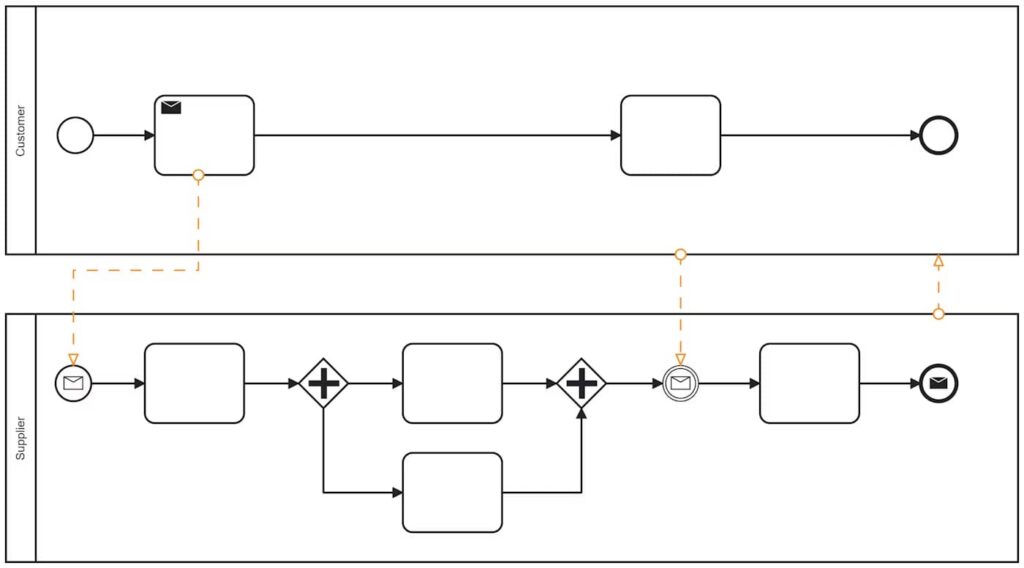
Message flow can connect flow objects in different pools, a pool and a flow object in a different pool, or two pools.
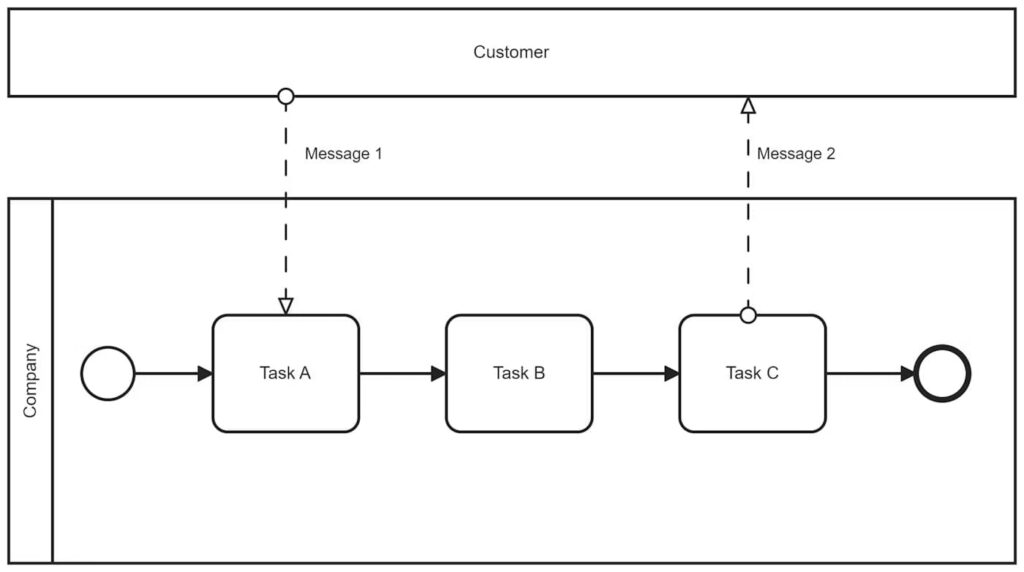
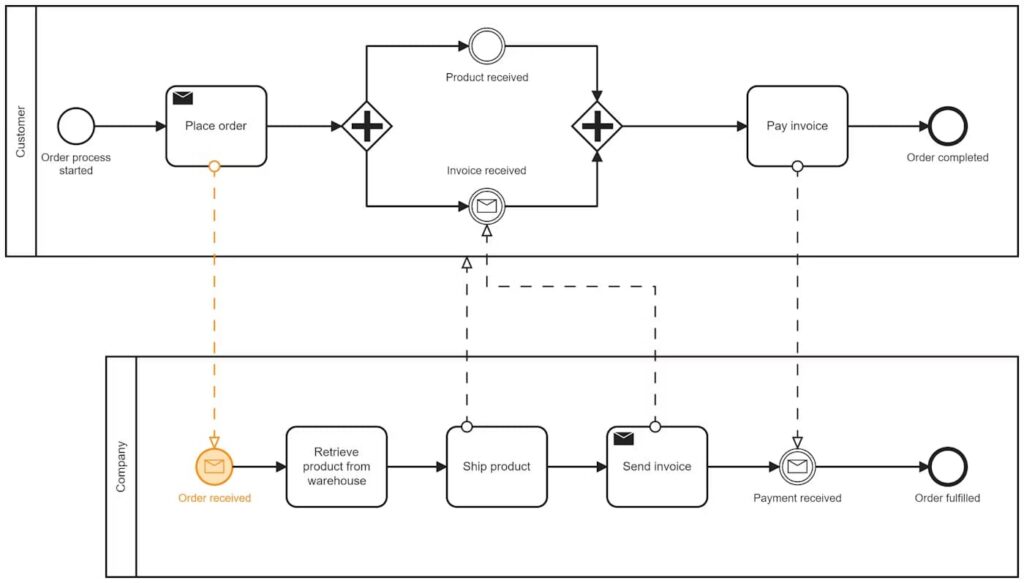
Incoming message flows must be received before an activity starts. Outgoing message flows are sent upon the completion of an activity. In the example above,
- Message 1 must be received before Task A can begin.
- Message 2 is sent immediately upon the completion of Task C.
Initiating Processes with Messages
Processes are often started upon the receipt of a message. In the following example, a customer order triggers Company’s order fulfillment process.